


When people talk about the future of UX, the predictions often swing too far.
Either “AI will replace UX” or “UX will become more important than ever.”
Reality sits in the middle.
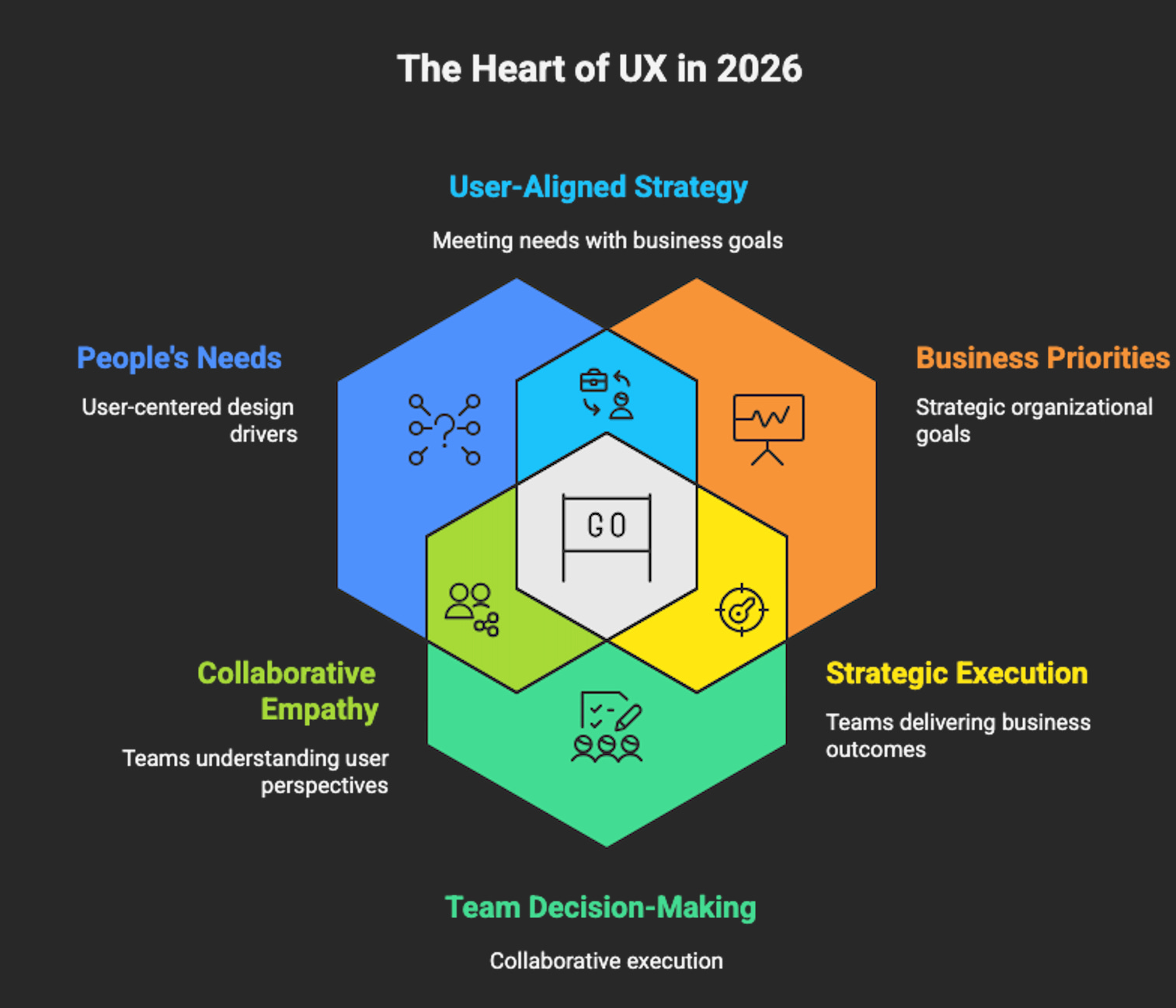
UX in 2026 will be shaped by the same forces shaping it today:
what people need, what businesses prioritize, and how clearly teams can make decisions.
This newsletter is a grounded look at where UX is actually heading and what skills will matter most.
In This Issue
• What will truly change by 2026
• The skills UXers must strengthen
• Three skills that will never expire
• How research and design work will evolve
• What teams will expect from UX
• Resource Corner
What will actually change by 2026
The biggest shift is expectation, not technology.
Teams now expect UX to do more than create interfaces. They expect UX to explain problems clearly, reduce confusion, and show how design decisions affect outcomes.
Outcomes mean the measurable results of a UX improvement, such as increased completion rates or reduced user errors.
AI will automate production-level tasks.
Human value will sit in thinking, interpreting, and simplifying.
Skills UXers must strengthen for 2026
Here are the three high-leverage skills that will define strong UX work.
1. Turning insights into decisions
Anyone can collect data.
The differentiator is turning insights into a specific recommendation.
A recommendation means a clear suggested action based on user evidence.
2. Explaining UX value clearly
UX value is the measurable benefit created by good UX.
UX value means results like quicker task completion, fewer errors, or more users completing a flow.
Design is no longer enough.
Teams want to know what the design improved.
3. Leading collaboration without authority
You will influence decisions through clarity, not titles.
This requires framing problems, showing trade-offs, and guiding discussions with calm judgment.
Trade-offs mean the benefits and drawbacks of choosing one direction over another.
These three skills raise your impact immediately.
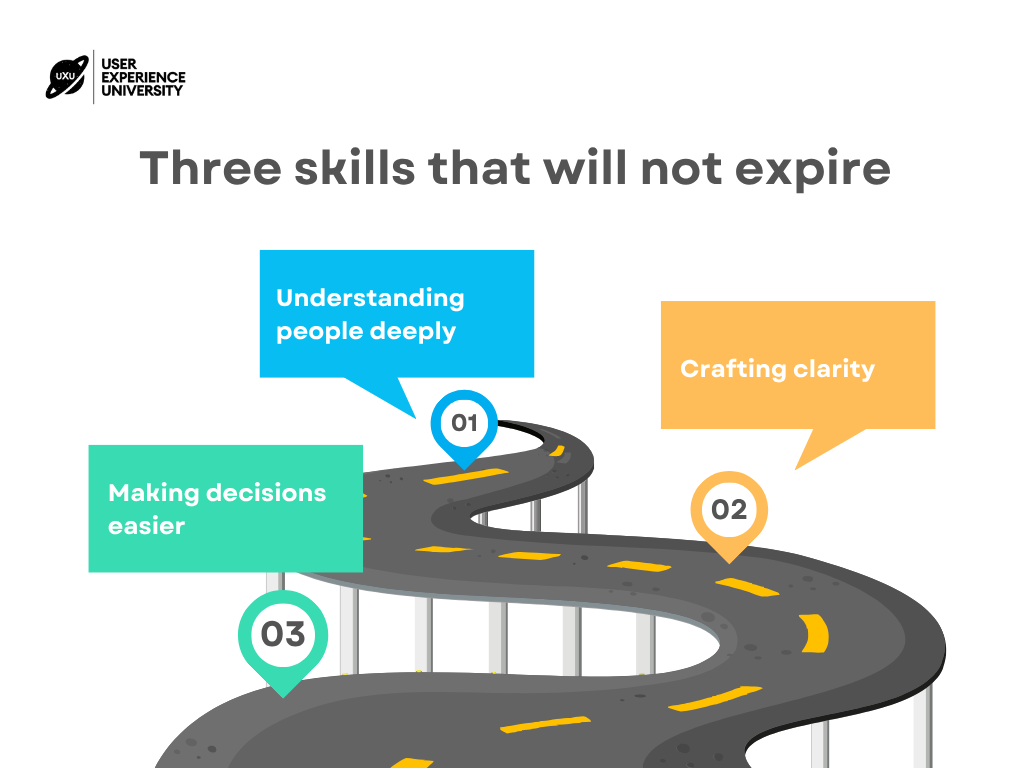
Three skills that will not expire
Despite technology changes, these skills remain timeless.
1. Understanding people deeply
AI predicts patterns.
It cannot understand emotions, motivations, or the small tensions users feel.
Understanding people means noticing context, behaviour patterns, and unmet needs.
2. Crafting clarity
Clarity is the ability to make something simple without making it shallow.
Clarity means removing unnecessary complexity so users reach their goal faster.
3. Making decisions easier
Strong UXers help teams choose a direction by explaining the problem, the options, and the consequences.
Consequences mean what will happen if one path is chosen over another.
This is the core of UX influence.
UXCON26 LOADING……
Everyone remembers a speaker moment, but the real “wow” is the moment you look around and realise…
“These are my people.”
The encouragement from someone you just met.
The feeling of being understood without needing to explain your job title.
That’s the magic this community creates together.
And at UXCON26, we’re building that space again, stronger than ever.
A place to grow, to connect, to feel seen, and to remember why you chose this field.
Come be part of it.
back to where we stopped…..
How research will evolve
Research in 2026 will become more continuous, lighter, and tightly linked to decisions.
• More quick tests
• More small-sample clarity work
• More behavior tracking
• More combining AI summaries with human judgment
• Less lengthy reports
• Less focus on big questions with no clear owner
Human interpretation will matter more than ever.
Interpretation means deciding what the data actually means for the product.
How design work will evolve
Designers in 2026 will move faster but think deeper.
• Faster wireframes
• Faster variations
• Faster exploration
• More attention to information architecture
• More clarity in writing
• More system thinking
Information architecture means structuring content so people can find what they need quickly.
Visual polish will matter, but understanding logic, flow, and meaning will matter more.
What teams will expect from UX in 2026
Across companies, expectations are shifting toward:
1. Outcome-focused portfolios
A strong portfolio shows the result of the work, not just the screens.
2. Clear reasoning
Teams want to see how you made decisions, not just what you designed.
Reasoning means the thinking behind the choices.
3. Comfort with data
You will not need to be an analyst.
But you must understand basic behaviors, funnels, and patterns.
Funnels mean the steps users move through from start to finish.
4. Practical problem-solving
Teams want UXers who simplify, unblock, and move work forward.
Practicality is becoming a competitive advantage.
Resource Corner
UX Design in 2026: A Realistic Roadmap | by Aram Andreasyan
If I started UX in 2026, I’d follow this roadmap.
Final Thought
The future of UX is not about tools.
It is about clarity, judgment, and the ability to help teams make better decisions.
If you can understand people, reduce complexity, and show the value of your work, 2026 will open more doors than it closes.
UX is evolving, but its core remains the same.
Help people succeed.
Help teams align.
Help decisions become clearer.
Those who master that will thrive.


