


You don’t need a 200-slide deck.
You don’t need 12 weeks.
You need a signal - soon enough to matter.
The most effective UX researchers don’t wait for perfect.
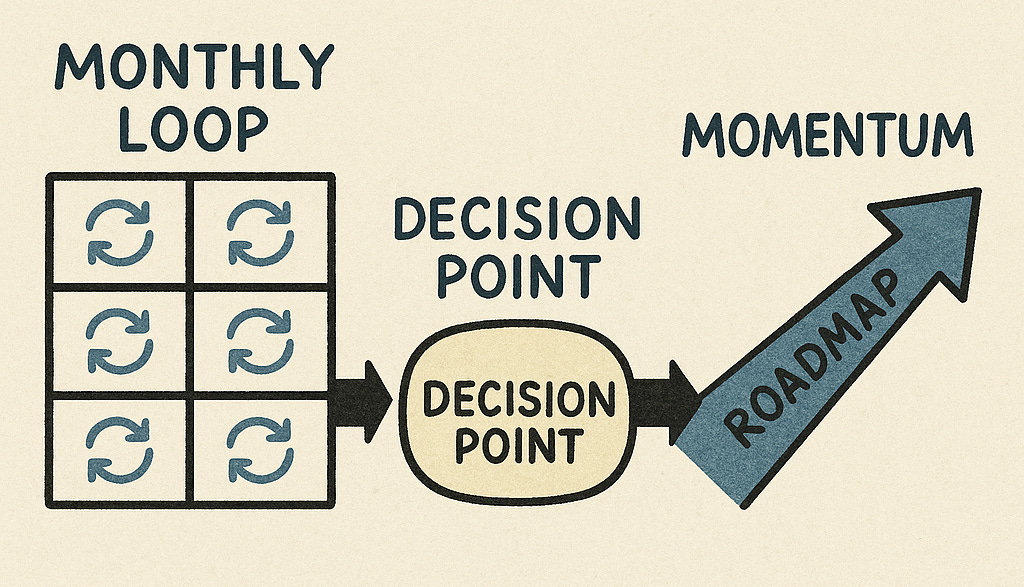
They build a cadence: small studies, tight loops, monthly rhythms that feed into decisions before they’re locked in.
This is a short guide to that kind of research - the kind that’s lean, practical, and impossible to ignore.
In This Issue
Why fast, monthly research beats perfect timing
What “lean research” actually looks like
A sample monthly cadence that works
How to build trust with repeatable learning
A reflection exercise to start your own rhythm
Signs your research is moving the roadmap
Resource Corner
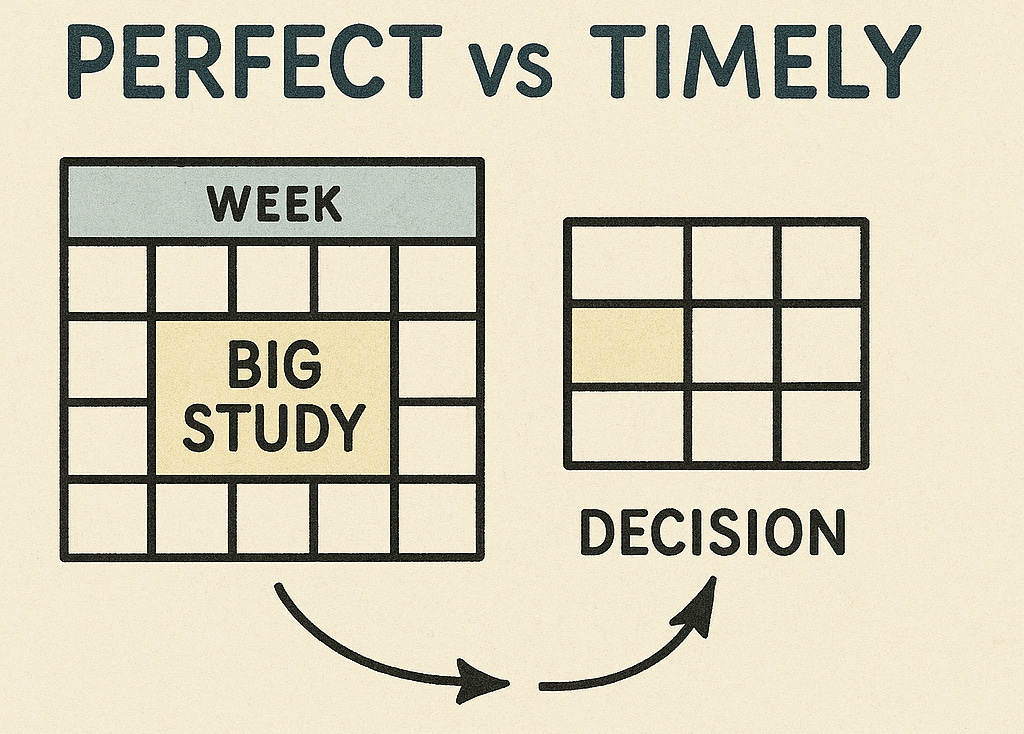
Why fast, monthly research beats perfect timing
Great research doesn’t always look impressive.
Sometimes it’s just the right insight at the right moment.
Teams don’t need all the answers.
They need just enough clarity to make a better bet.
Waiting for the “right time” usually means it’s already too late.
By then, the decision is made. The team has moved on.
The window to influence has closed.
What lean research actually looks like
3–5 participants per round
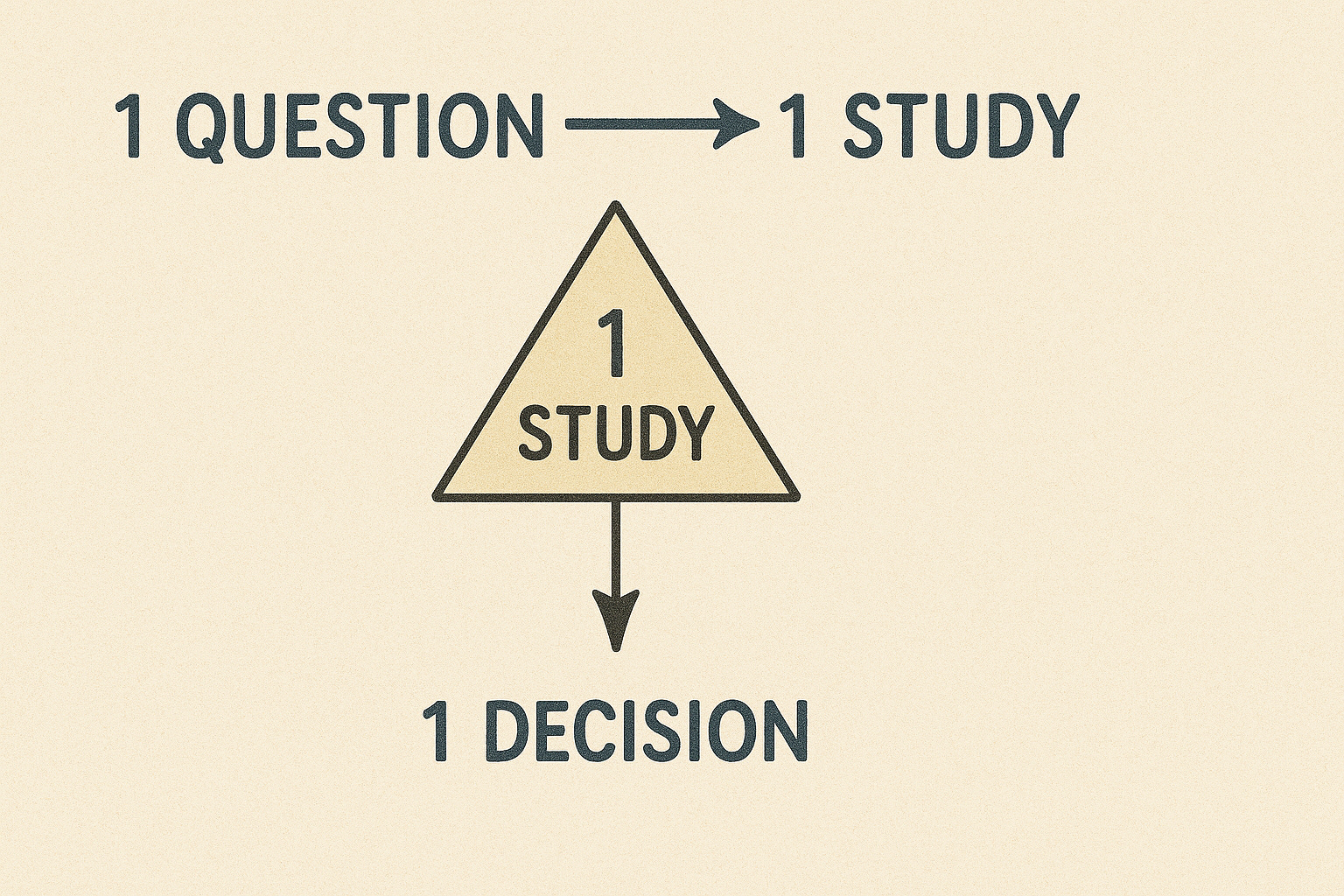
1 focused question tied to a real decision
Light, focused synthesis (1–2 hours max)
Delivered in 3–5 slides, a Slack post, or a 5-minute meeting
No polish. No cinematic recap.
Just clarity, now.
Lean research doesn’t replace deep dives.
It feeds momentum between them.
A sample monthly cadence that works
Week 1 → Prioritize
Work with PMs and designers to ask:
“What decision do we need to make this month - and what’s unclear?”
Week 2 → Draft & Recruit
Write 3–5 core questions. Recruit a handful of users. You don’t need volume - you need relevance.
Week 3 → Run & Synthesize
Talk to people. Take notes. Spot themes. Clip videos if helpful.
Week 4 → Share & Act
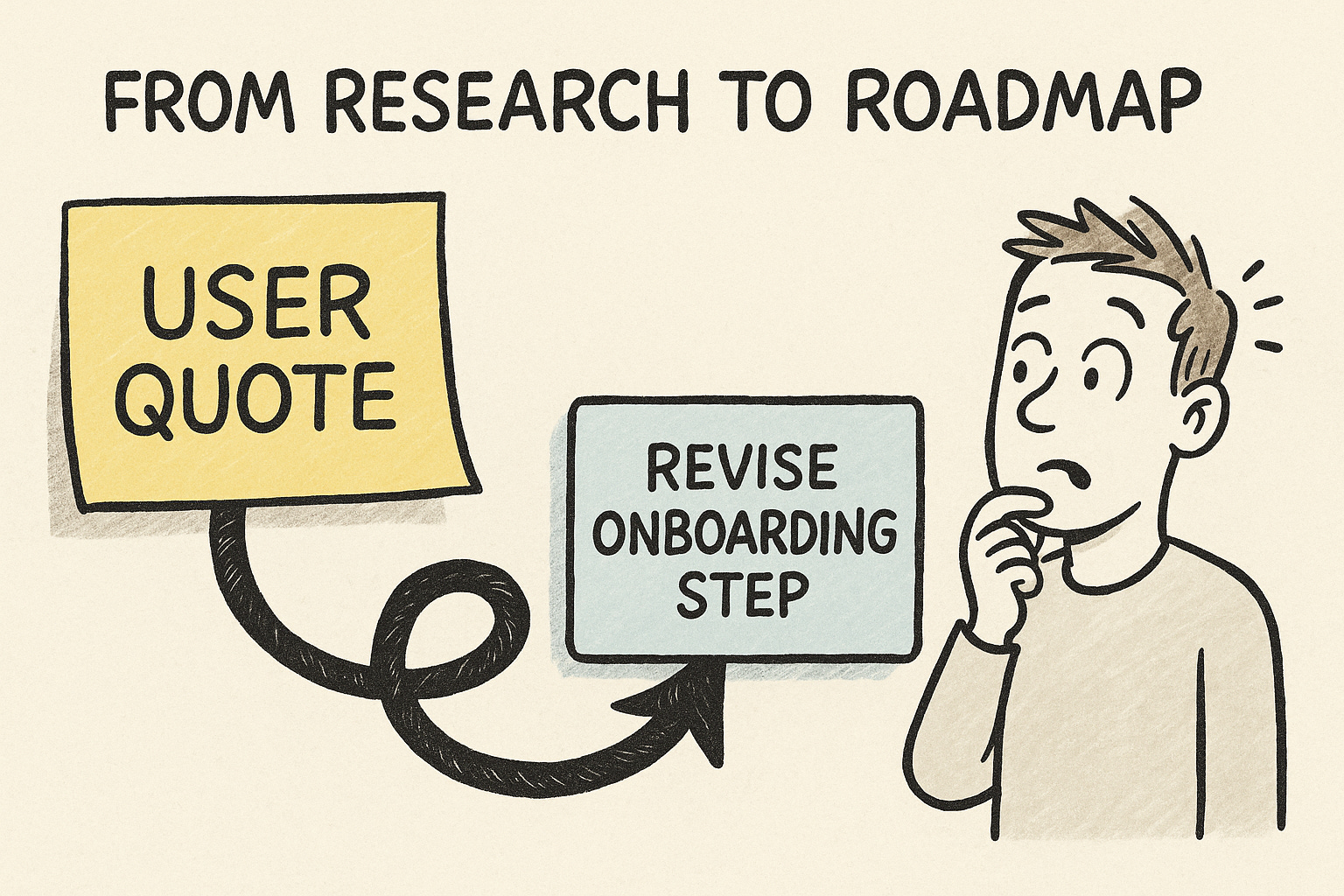
Deliver insights. Add 1 slide to sprint planning. Suggest one change. Push one decision forward.
Then do it again next month.
How to build trust with repeatable learning
Stakeholders trust what’s consistent.
A monthly cadence builds reliability, and that changes how people see research.
It shifts the narrative from “one-off reports” to:
“We always learn something useful with [your name].”
Show up. Ship insight. Tie it to the next step.
That’s how research becomes part of the product engine.
Reflection exercise: Build your own cadence
Take 10 minutes this week and answer:
What are the next 3 product decisions we’ll make?
What are we currently assuming?
What’s the riskiest part of that assumption?
How could we test that risk with 3–5 users next week?
Bonus: Share the idea in your next standup.
You don’t need permission. Just get curious and start.
Signs your research is moving the roadmap
PMs ask “What are we learning this month?”
Designers delay a decision to wait for your input
Research insights are quoted in sprint planning
Your summaries are shared across functions
You hear your own language repeated in strategy meetings
When research is regular, decisions get smarter.
Resource Corner
Lean UX Research for Startups: An Opinion Piece
Teresa Torres — Continuous Discovery Habits
Google’s HEART Framework for Measuring UX | IxDF
Final Thought
You don’t need to convince the team that research matters.
You just need to show up every month and prove it.
The power of lean research isn’t just in speed.
It’s in rhythm.
It builds trust. It builds momentum.
And it quietly builds better products - one insight at a time.


