


Leaders don’t ignore research because they’re careless.
They ignore it because it’s unclear what it’s for.
Long decks get skimmed.
Docs get buried.
Plans get overlooked.
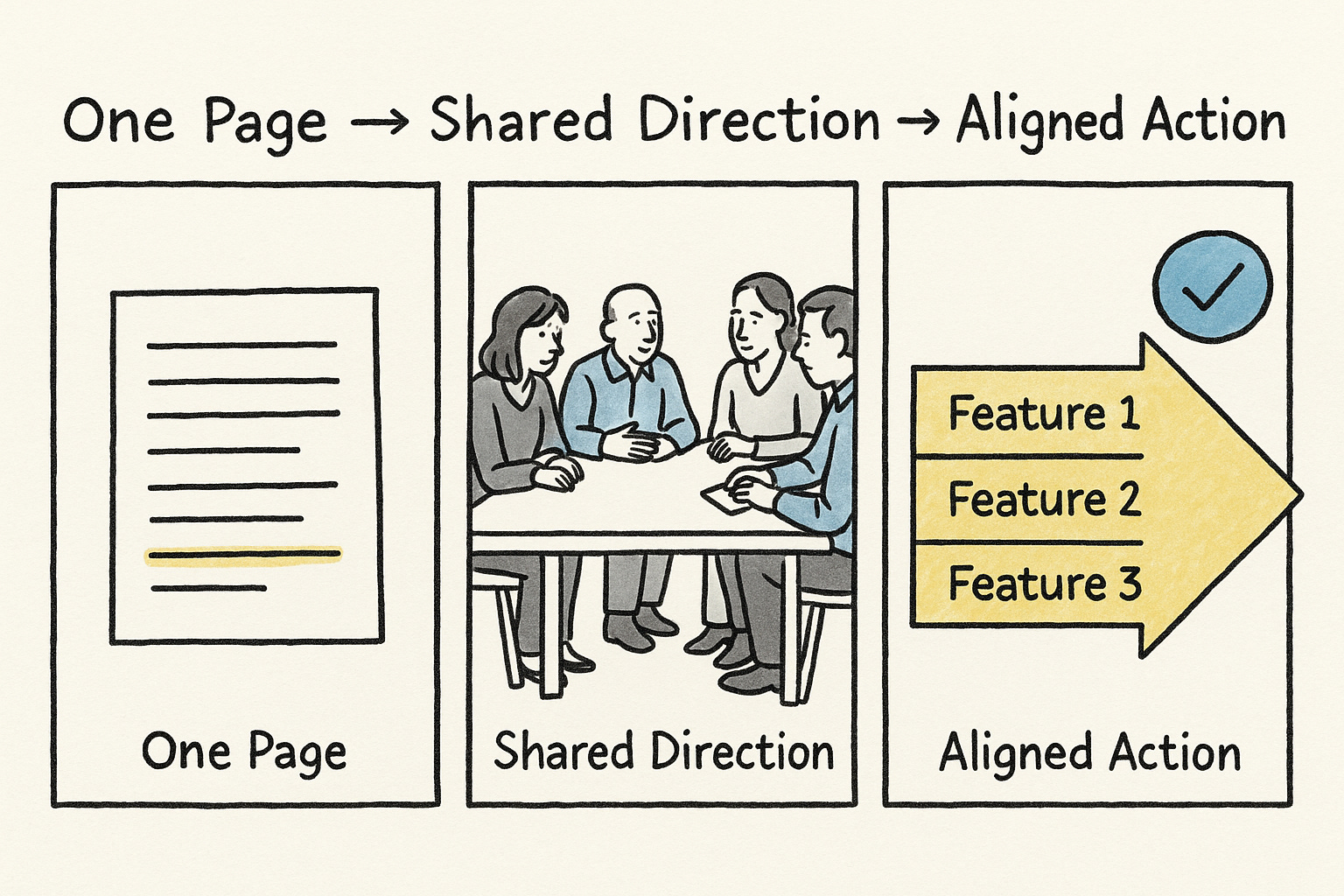
But a one-page research plan - written with precision and purpose - becomes something different.
It becomes a decision-making tool.
This is a short guide to writing one that gets read, gets remembered, and gets your research funded.
In This Issue
Why leaders ignore most research plans
What a one-page plan actually needs
The five building blocks of clarity
An exercise to write one in under 30 minutes
Signs your plan is landing with decision-makers
Resource Corner
Why leaders ignore most research plans
Because they don’t see themselves in it.
A list of methods doesn’t tell them what they’ll gain.
A problem statement with no urgency doesn’t move them.
And a 15-page slide deck might as well be a bedtime story.
If your research plan doesn’t help make a decision, it disappears.
Great researchers write plans that feel like this:
“Here’s what we don’t know. Here’s why it matters. Here’s how we’ll learn it in time.”
What a one-page research plan actually needs
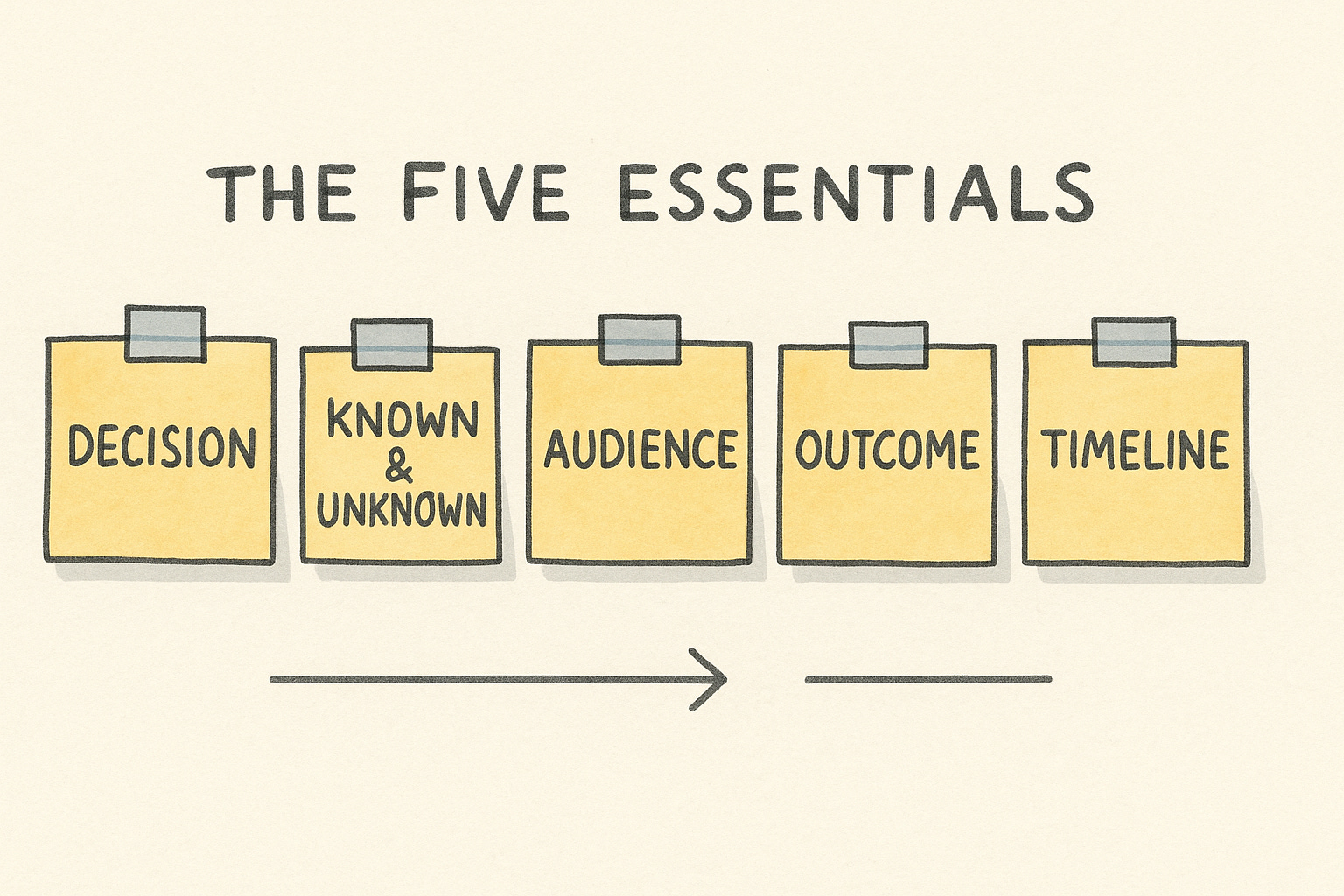
Just five things. No more. No less.
You’re not trying to impress. You’re trying to align.
These five sections show that you’ve thought critically - and that your plan is built to serve a decision, not just curiosity.
The five building blocks of clarity
1. The Decision at Stake
What decision will this research inform?
Examples:
Prioritize feature A or B
Choose between onboarding flows
Confirm product-market fit for a new segment
If no decision is named, pause. You don’t need research yet — you need clarity.
—
2. What We Know (and Don’t Know)
List 1–2 insights that are solid. Then name 2–3 open questions that carry risk if left unanswered.
This frames the study as purposeful, not academic.
—
3. Who We’ll Talk To (and Why)
Who matters most for this decision? Be specific. “First-time mobile users in the U.S. who churn within a week” is better than “users.”
—
4. What Success Looks Like
Define what a useful outcome sounds like. Not just “learning.” Something like:
“We’ll walk away knowing which feature most impacts first-session success.”
—
5. Timeline and Format
No fluff. Just:
When you’ll recruit
When the insights land
How they’ll be shared (brief, slides, Slack, workshop)
If you want to add credibility, name constraints:
“We’re prioritizing speed over polish due to Q4 planning.”
Exercise: Draft your plan in 30 minutes
Open a doc. Set a timer for 30 minutes. Fill in:
One decision that this research will inform
Two things you know and two things you don’t
Who you’d talk to if you only had 5 sessions
One sentence describing what success looks like
A rough timeline and how you’ll share what you learn
This doesn’t need polish. It needs clarity.
You can clean it up later.
But once you’ve written it, share it.
Early input beats late regret.
Signs your plan is landing with decision-makers
Stakeholders ask you to present before you even recruit
Your plan is referenced in sprint planning or strategy docs
You’re looped into decisions before the problem is fully defined
Your timelines are respected because people see the value
You hear your “knowns” and “unknowns” quoted by others
Resource Corner
Your research just got easier with our Research Co-Pilot.
How To Write a Research Plan (With Template ...
How to create a UX research plan – Free template included
Creating a Successful UX Research Plan - Hubble
Final Thought
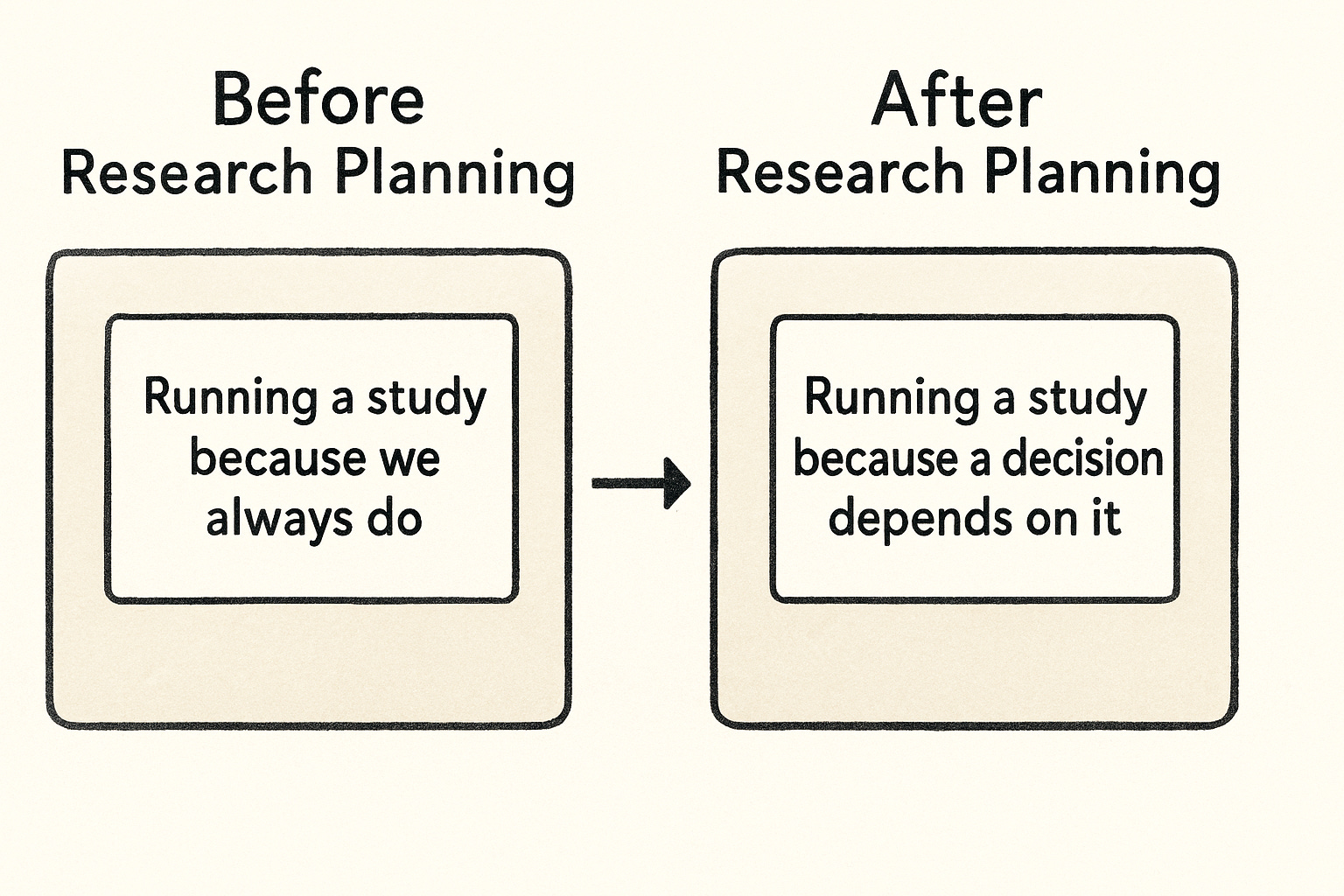
Great research doesn’t start with methods.
It starts with decisions.
Your plan isn’t just for alignment. It’s a promise:
“We’re going to learn something that changes what we do next.”
Make it short. Make it sharp. Make it matter.


