
UX’s Most Underrated Skill
How to Communicate This Skill Internally


There is a skill in UX that rarely gets called out on job descriptions.
It does not fit neatly into a Figma prototype or a research report.
And yet, it is the difference between teams that make progress and teams that stay stuck in planning mode.
The skill is translating strategy into action.
Not just understanding the strategy.
Not just nodding along during planning sessions.
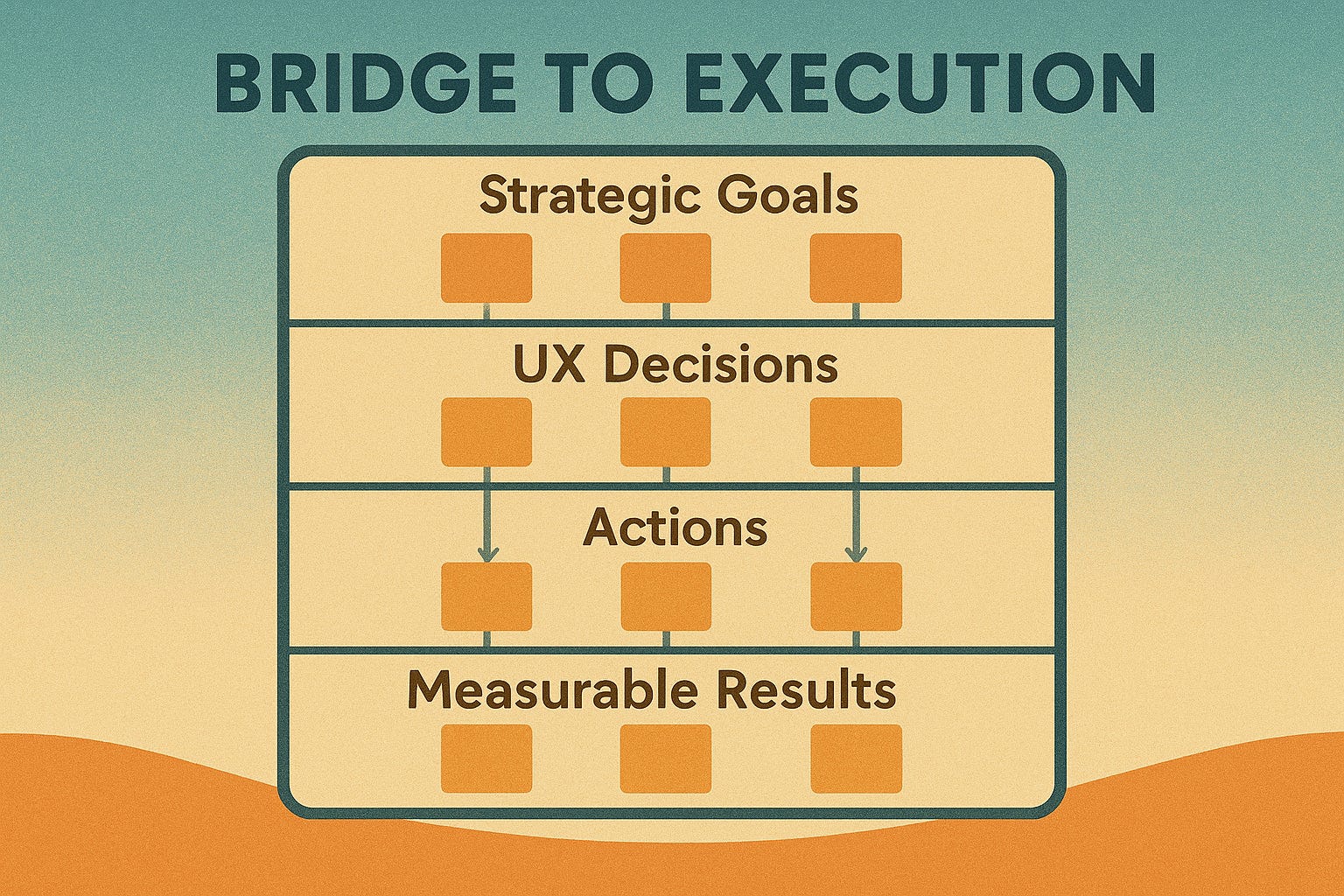
But taking high-level business goals and turning them into clear user paths, prioritized decisions, and concrete product moves that actually ship.
This ability is what separates someone who “does UX” from someone who drives outcomes.
In This Issue
Strategy Sounds Big. But It Lives in the Details.
Why Companies Struggle with Translation
Signs You Are Already Doing Strategic Translation
A Practical Workflow for Bringing Strategy Down to Earth
How to Communicate This Skill Internally
Resource Corner
Strategy Sounds Big. But It Lives in the Details.
Companies love to talk about vision.
Become market leaders. Improve retention. Increase customer trust.
These are important goals, but none of them tell a team what to design tomorrow morning.
This is where UX steps in.
UX practitioners who can translate strategy into action ask:
What specific user behavior needs to change for this goal to be real
What friction is currently blocking that behavior
What design change or flow adjustment will remove that friction in the simplest possible way
This is not abstract thinking. It is applied clarity.
Why Companies Struggle with Translation
Most teams are full of good ideas.
Strategy is abundant. Actionable clarity is not.
Common reasons:
Leadership speaks in outcomes without operational detail
Product teams default to feature lists instead of behavior change
UX teams are pulled into execution before understanding goals
Everyone assumes someone else is connecting the dots
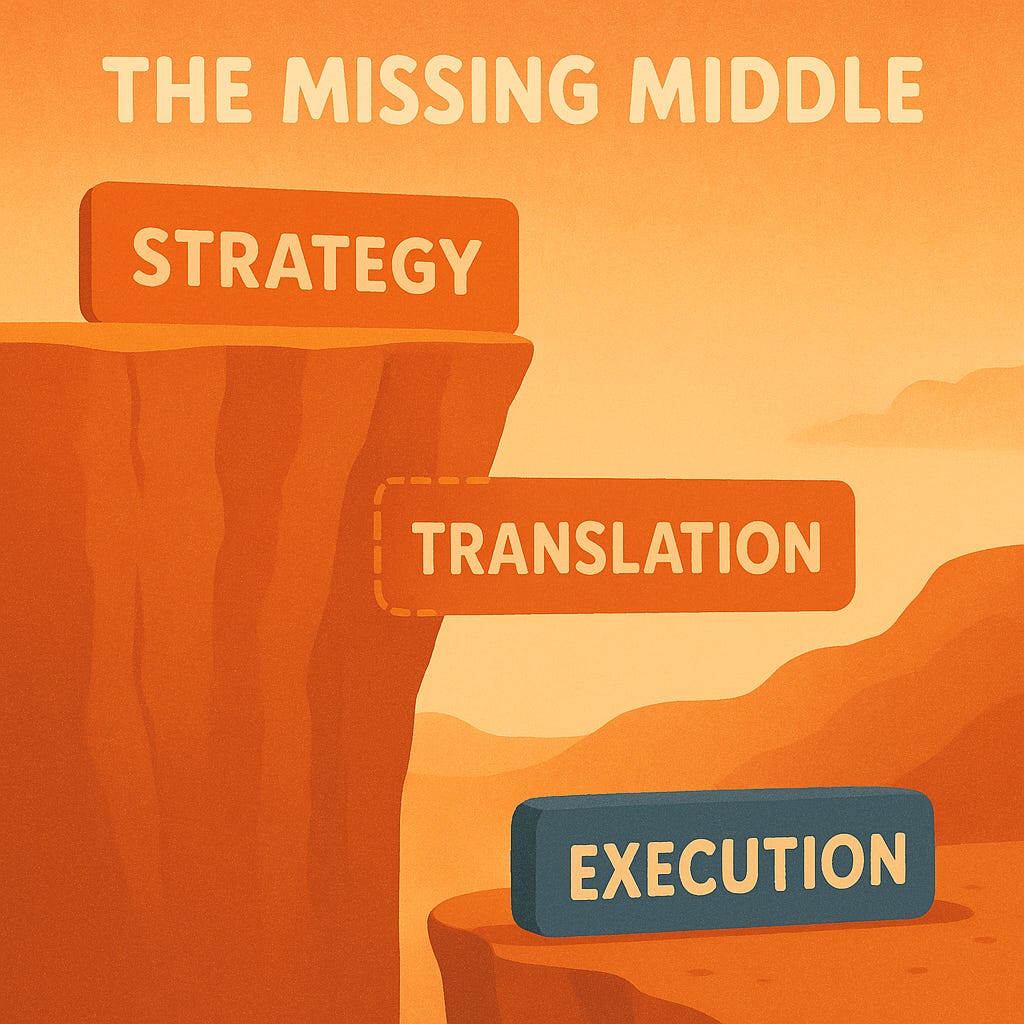
When no one owns the translation layer, teams do a lot of work but make very little progress.
This is why UX influence matters most in the middle.
Signs You Are Already Doing Strategic Translation
You might already be the person who:
Reframes requirements into user problems before designing
Helps teams understand the real job a feature is trying to accomplish
Pushes for measurable success criteria before moving forward
Simplifies complex business priorities into clear user flows
Explains design decisions in terms of outcomes, not aesthetics
If this sounds familiar, you are already practicing strategic UX.
You may just not be naming it.
And naming it is what turns it into career capital.
If you’re feeling stuck in your UX career… this is your moment to reset.
Join the 1-Day UX Career Breakthrough Workshop
📍 Live in Alexandria, VA | Nov 22 | Limited to 30 seats

Tired of hitting “Apply” and hearing nothing back? It’s not you — it’s the strategy.
In one action-packed day, UX veterans Joe Natoli and Rajeev Subramanian will help you rebuild your career system from the ground up.
✅ Rewrite your LinkedIn profile for real traction
✅ Build a recruiter-magnet personal brand
✅ Practice outreach + interview skills that actually work
✅ Leave with a 90-day game plan to land the right UX role
🎯 30 spots. One day. A career that works.
back to where we stopped….
A Practical Workflow for Bringing Strategy Down to Earth
Use this as your default translation sequence:
Restate the business goal in plain language.
Example: “Reduce churn in the first 30 days.”Identify the user behavior connected to that goal.
Example: “New users need to reach value faster.”Find the friction that prevents that behavior.
Example: “The onboarding flow requires eight steps and no progress indicator.”Design the smallest meaningful improvement.
Example: “Shorten onboarding to three steps and show progress.”Tie the design change back to the business goal.
Example: “Faster perceived progress increases activation, which reduces churn.”
This workflow makes you the person who takes the goal and says:
“Here is exactly how we make that real.”
That is strategic influence.
How to Communicate This Skill Internally
Do not say: “I improved usability.”
Say: “This change reduced completion time and increased activation by 12 percent.”
Do not say: “I redesigned onboarding.”
Say: “I accelerated first-value realization, which supports our retention target.”
Stakeholders respond to language that reflects business value.
Once you start speaking this way, you stop being seen as someone who designs screens.
You become someone who moves the business forward.
Resource Corner
Final Thought
The future of UX does not belong to the most artistic or the most technical.
It belongs to the people who can understand the direction of the business, translate it into day-to-day decisions, and deliver outcomes teams can see and measure.
If you are doing this work, even quietly, you are already operating at a strategic level.
Keep practicing the translation layer.
It is the skill that turns UX practitioners into trusted partners.
I love this! Communicating insights using the stakeholder’s language is crucial. This is why UX research, analytics and product need to work closely together to really understand the impact of research on products metrics.